
Septic 101 Pricing Septic Reports Real Estate Pumping Glossary Online Shopping
Quite simply, we can handle it all. We can simply maintain your system, make repairs, offer advice on maintenance schedules and bacterial additives programs.
The answer is simple,
We want your system to work for as long as possible. Our primary goal is to provide quality service. We take our service a few steps further and make sure our trucks are clean, our work area is secure, we do a complete job from start to finish. Your families health and safety is our main concern. If you have a safety issue with your system we at the very least will make sure you are aware of the problems and what repairs are necessary to fix it.
Most homes in rural areas are serviced by a septic system rather than a sewer system. Septic systems are small onsite waste water treatment systems. They have a lifespan of approximately 30 years if they are properly maintained and cared for. They do not require much in the way of maintenance. We recommend the use of the right bacterial additives in conjunction with pumping the tank every 3 years as the best possible maintenance program. In the next few paragraphs we will cover the fundamentals of septic systems and what we recommend you should and should not do.
The septic tanks can range in size from 750 gallons to 1500 gallons or larger based on the size of the home. Most modern septic tanks are concrete. Plastic is used in some harder to install locations because of its lighter weight and ease of installation. Every "septic" tank has at least 2 compartments. Some older models had 3 compartments. NEVER ONLY ONE. The 2 compartments are sometimes referred to as sides of the tank. The liquid side and the solid side. All of the drains in the house including the sinks, showers, toilets and laundry enter the septic tank. They enter on the inlet side or solids side of the tank. There is a baffle or center wall inside the tank that separate these two sides. This baffle wall has a hole in the middle to allow the liquid effluent to flow across to the outlet side or liquid side of the tank. From here the liquid effluent exits the tank and goes to the leach field or leaching area. Septic tanks maintain an operating level about 6-8" from the top of the tank. When waste enters the tank, some will float and form what is called a scum mat. Paper products and lighter substances remain here until the bacteria have a chance to digest them. The liquid effluent remains in the center portion the the tank. The material that the bacteria digest then sinks to the bottom of the tank and forms the sludge layer at the bottom of the tank. The idea is to pump out the solids before they reach the point that they can be carried out to the leaching area with the effluent. Unless you have a very large family or abnormal water usage, pumping every 3 years will be adequate.
Everything that goes down any drain in the house ends up in the septic tank. That is why it is so important to make sure you only flush things down the toilet that can be digested by the bacteria. That car will end up at the bottom of the tank until the pumping service comes to empty the tank. It won't be digested or go away, it will just sit there taking up space.
As a general rule, Soaps, household cleaning products and toilet paper are all okay to flush down the toilet when used in moderation. Baby wipes, paper towels, toys, feminine products, contraceptives, strong chemicals such as paint thinner, acids and drain cleaners can clog or damage the drains and cause your system not to function properly of fail.
There are a wide variety of chemical additives and bacterial / enzyme products on the market today. There are a lot of promises made including the most common that you will never have to pump your tank again. This is simply not true.
You need to be very cautious when choosing additives for your system. The old adage "You get what you pay for" is very true when talking about chemicals for your septic system. The products that are sold to you over the phone or available commercially at the home centers in my opinion should not be trusted. Through our pumping business, we have seen first hand the damage they can cause to systems. They make a lot of promises but won't stand behind them or prove that they work at all.
In instances where your tank is growing older (5 yrs or more) or you are greatly depleting the bacteria levels in your tank you should consider adding bacteria to your system. Consulting your septic technician can determine your need to start an additive program and which program will best suit the needs of your system.
Some of the instances where adding bacteria would be indicated are as follows:
1. If you use prescription medications or vitamins on a regular basis.
2. If you have a large family or more than 4 adults living in the home.
3. If you use excess acids, antiseptics, bleach, caustic drain openers,
cleaning compounds, chlorine materials, disinfectants, lotions,
medical residue, polishes, sink and tub cleaners, toilet cleaners.
4. Strong or offensive odors
Aging systems that have slowed will also benefit from the right additive program, Pro-Pump is 100% safe to use, it is both non toxic and safe for the environment. Pro-Pump offers a variety of products specifically designed to treat septic system field absorption, septic odor and Grease Trap problems. Pro-Pump is a facultative bacteria designed to function in aerobic and anaerobic environments. For more product specific information please go to www.propump.com
Adding bacteria to your septic system and starting a maintenance program with additives which are designed to enhance system performance such as Pro-Pump, does not eliminate the need for pumping your tank every 3 years as recommended, nor will it fully restore a "Failed" system. Pumping your tank in conjunction with Pro-Pump gives your system the best chance at the longest possible lifespan.
There are many combinations and configurations with regards to leach fields and seepage pits. This section will only cover the standard pipe and gravel leach field. It is the most common in our area.
The most common leach field consists of a series of trenches containing perforated pipe surrounded by septic rock and covered with straw or mesh and dirt. The purpose of these trenches is to allow the effluent leaving the tank, a place to go. The effluent entering the leach field is partially absorbed into the soil and partially evaporated. This leaching area should not be driven on or covered with a solid object such as a driveway or patio. You also have to maintain certain setbacks from pools, streams, water lines etc. All of this including the septic tank has to be county approved and permitted before it can be installed on the property. The most common is the gravity feed system. There are also versions of the leach field that involve pump systems and modified trenches based on the property and restrictions.
Access
By access we mean the effort involved in getting to and removing the tank lids. Some homes have the tanks located in a open area in the back of the house, others are located right outside the front door. Being able to easily open the tank is a benefit both for the company and the homeowner. It promotes more regular service and can save a lot of back breaking work.


Example of what a sidewalk can do to the access of a septic tank
As you can see in the pictures above, this tank has one lid located under the sidewalk, making access to the tank next to impossible to adequately service. We ended up removing the sidewalk and installing risers through to the surface to facilitate a more workable access to the tank.
Effluent surfacing on the ground or soft spots in the leaching area
Backup problems in the house or slow flushing toilets
Green lush growth over the leach lines commonly referred to as stripes
Effluent showing up in the shower or bathtub when other drains are used
Bubbling sounds coming from the toilet
One thing to remember, some of these warning signs are also signs of a blockage in the line. If you should notice any of these, proper diagnoses of the system will reveal the actual cause and in a lot of situations, a smaller, less expensive repair can be made to restore the system before complete replacement is needed.
How much is too much? Unlike sewer systems, Septic systems can only take so much water before they will back up due to over saturation. Leaky toilets, ground water, too many people living in the house, broken sprinkler systems all play a part in the amount of water you are expecting the drain field to absorb. When you have a very rainy season you may hear your neighbors talking about the water table or ground water. Basically what that means is that the underground water levels rise and cause interference with the leaching systems. During the summer time, most leach fields will function normal and you may never notice a problem. Come winter however, they may not function at all and will need to be shut off completely and the tank pumped every week or so.
Even a new system can fail due to over saturation. When you utilize a septic system, be sure to fix all leaks right away and exercise caution with your water usage. A little common sense goes a long way when it comes to septic systems. If you think you are having trouble with your system because of over saturation, collect your water usage figures and pencil it out. Your system should be designed to handle 140 gallons (20 cubic feet) of water per day per bedroom. A 3 bedroom house for example should have a water usage of no more than 420 gallons (60 cubic feet) per day. In most of the cases we have investigated, we have found that the household was generating 4-600 gallons over what it was designed to take and the homeowner did not even realize it. (Sprinklers do not count for this example)
For specific information regarding setbacks and restrictions it is always a good idea to contact the San Diego County Dept of Environmental Health with your questions or concerns.
760-471-0730
San Marcos Ca 92069
Septic tanks come in a variety of sizes depending on the size of the home. All septic tanks have at least 2 compartments. Some older tanks have 3 compartments. We always pump all compartments and rinse the tank. We check the basic functioning of the system and make the homeowner aware of any safety issues or repairs that are necessary or that could become necessary in the future.
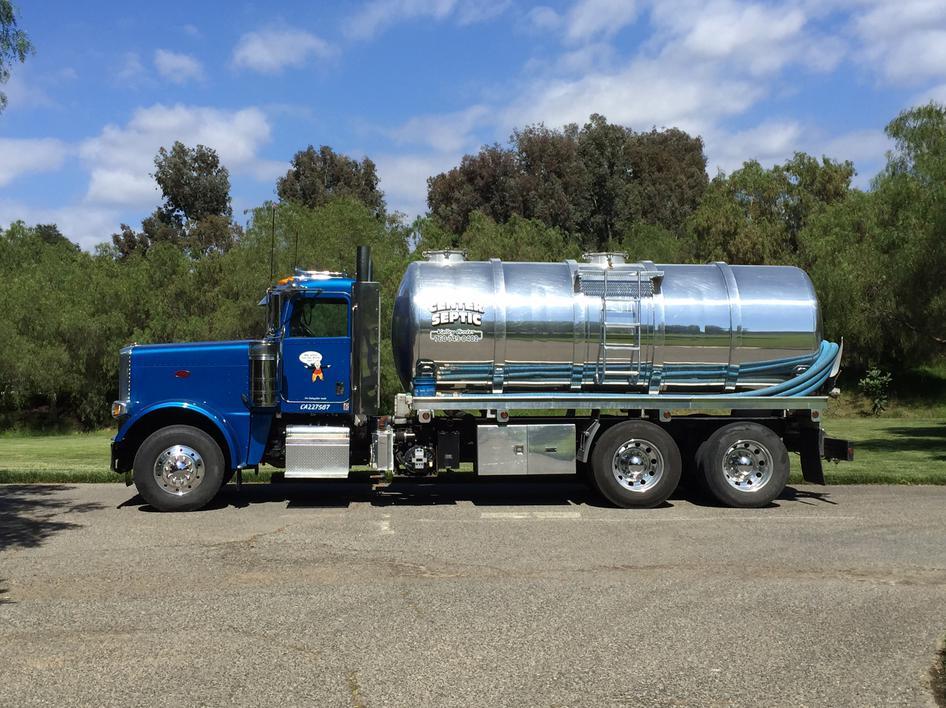
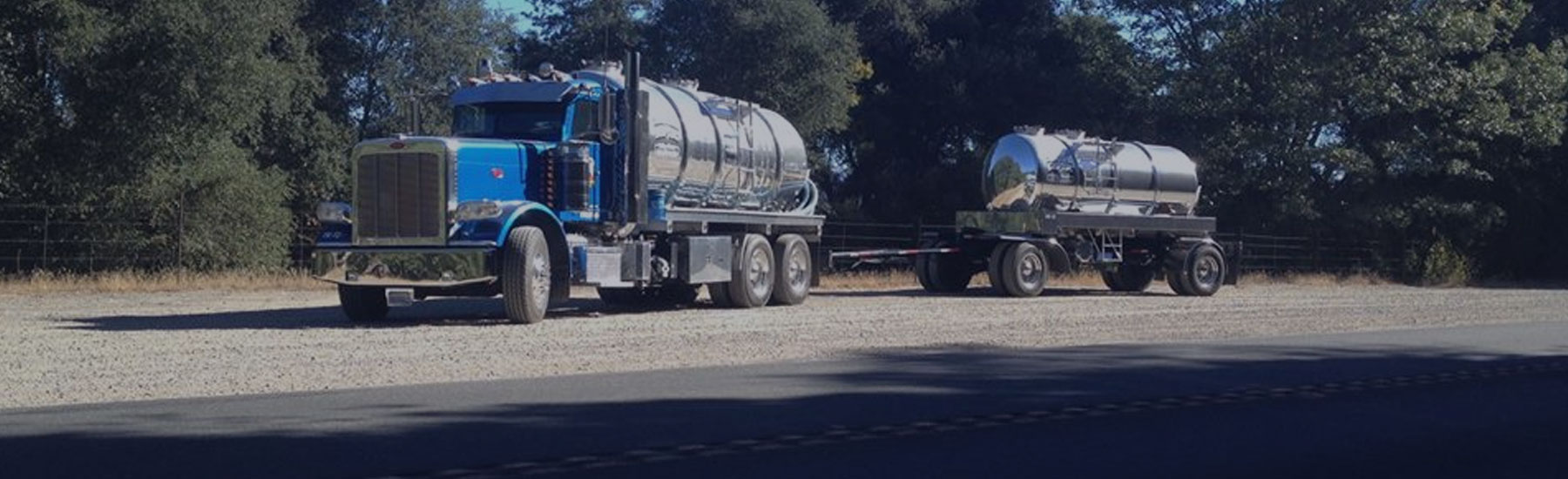
Our trucks are equipped with 200' of hose. We don't always need to be right at the tank in order to pump it out. We do have longer hoses available if necessary.
We do need to have water available in order to pump the tank and rinse both the tank and our hoses when done.
Whether you are putting your home on the market or looking to purchase a home that utilizes an onsite wastewater treatment system or septic system or you are an agent representing either the buying or selling parties, the following information can be of great value to you or your clients.
SELLING YOUR HOME
When you make the decision to sell your home there are many factors involved. Finding a buyer is often times the easy part. Many times the septic system is forgotten about until the last minute. Are you ready? How much information do you have about your system? The following is a list of the septic related questions you need to know prior to our arrival.
1. Where is the septic tank? Do you have a layout drawing?
2. Are you going to uncover the lids or do you want the company to do it?
3. How long has it been since it was last pumped?
4. Have you had any problems in the past?
5. How many people live in the home?
6. How many bedrooms does the home have?
7. Does your laundry go into the septic tank or does it utilize a gray water system?
8. Have there been any repairs to the system in the past, if so, what were they and when were they done?
9. Is this the original system?
10. When was the system installed?
11. Are you prepared to have repairs made to the system should it be necessary?
You should feel comfortable with your decision to hire our company, make one phone call and know you are going to be well cared for from start to finish. We do not hire sub contractors, nor do we refer you on to other companies to complete the repairs and leave you hanging if it gets too tough to handle.
PURCHASING A NEW HOME THAT USES A SEPTIC SYSTEM
You have just found the house of your dreams, the price is right, the house is great, fantastic views and everything you ever wanted in a house.
Do you really know what you are getting into? Have you read your septic certificate? Really read it! What do you think, does it pass or fail? The following questions we feel are things you should know or ask about before you purchase that house of your dreams.
1. What type of water test was done to the leach field, metered or 20 minute?
2. Did it show passing or failing results?
3. What shape is the septic tank in and are all the components in place. Has the deterioration process gotten to the point of being a safety and health concern?
4. How old is the system?
5. How large is the property, is there room for additional leach lines when the existing field fails. Are you planning a room addition or pool? If so, is there room for a larger field and or tank if necessary and still maintain the required reserve area?
6. Is this the original system?
7. Was this a permitted septic installation?
8. Were all compartments pumped when the certificate work was done?
9. Has the system had regular maintenance?
10. If problems were listed, were they repaired?
11. Is this a high water table area?
12. Is the system large enough for the size of the home?
13. If the tank has risers, are they to code and large enough to do an adequate pumping job?
14. Has there been chemicals used to maintain the system in the past?
15. Has any part of the system been driven or parked on in the past? If so, has any damage been done to the system.
16. Is there more than one tank or system on the property?
SEPTIC SYSTEM INSPECTION REPORT
Our Septic Report Packages are one of the most comprehensive in the business today. We feel that providing both the buying and the selling parties all of the information available is what is important.
The one page report by itself leaves a lot to the imagination. There are many questions that should be addressed that end up being swept under the rug only to be discovered when it is too late.
We gather all septic related information from the selling party or property representative and on site observations, We base our test results on the size of the home, provide tank location, including photos, for future reference, repair information and site specific observations for codes and functioning related issues as well as future system care for buyers that are new to septic systems.
Our philosophy is that honesty is the best policy. We will provide straight forward, honest, helpful and direct answers to your questions. Granted, they might not always be what you want to hear, but so much of life is sugar coated. Your septic system doesn't need to be.
Click on the "Metered Water Test" bar for more information
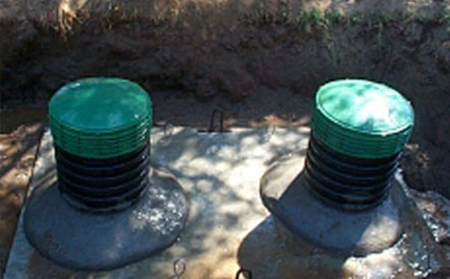
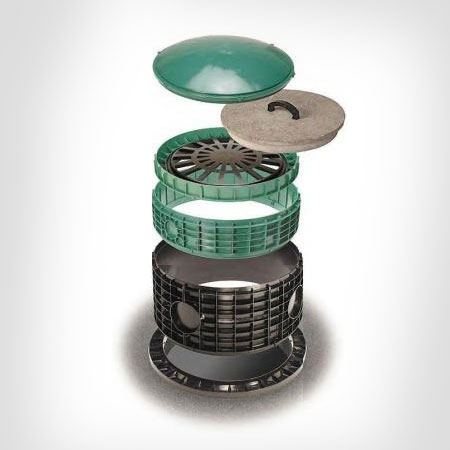
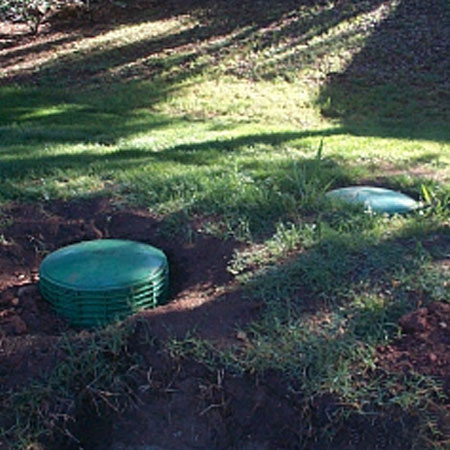
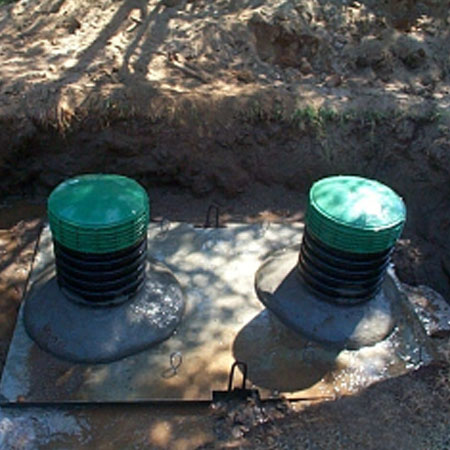
Our company feels that septic tank risers should be installed on every tank with a depth of 18" or more. They can be installed either above the ground or just below the surface. They eliminate virtually all the labor involved with pumping and maintaining the septic tank and promote regular maintenance.
Riser products are available in our online store. You can mix and match many different parts to create just the right riser system for your tank.
We now carry safety products and locks for the risers as well as adapter rings to allow you to install them on almost any surface even other brand risers and corrugated pipe.
Septic Tank Lids - Solid Levels - Compartments - Tank Risers - Cleanouts - Uncover the tank - Debris - Traffic Rated - Regular Maintenance - Metered Water Test - Deterioration - As Built Drawings - Saturation
Each compartment of a septic tank has an access port which is sealed with a lid. These can either be concrete, plastic, or fiberglass depending on what type of tank is installed. Most common are the square concrete lids which are approximately 21". Some of the larger tanks have 24" lids which can be either square or round. Don't confuse "Cleanouts" for tank lids.
When the waste generated from within the house enters the septic tank, it divides into 3 basic levels. Lighter waste or paper, soap or grease usually will float on the top, the middle layer is primarily liquid effluent and the sludge and heavier solids are at the bottom.
An actual septic tank will have compartments in it. Older tanks had 3 compartments. Newer tanks built today have only 2 compartments or chambers inside them. All actual septic tanks will have at least 2 compartments in order for the solids to be controlled and thinned out before entering the leaching area.
A cleanout is a 4" pipe with a square notched cap that sticks up out of the ground usually between the house and the tank. Some homes have 2 cleanouts. What they are used for are when a plumber needs to snake the line to clear a blockage, this will give them an outside access to the line without having to remove the toilet. The are also used to add chemicals or additives to the system without having to uncover the lids. They can also be helpful in locating the septic tank. They cannot be used to pump the tank.
Tank risers are extensions of the existing tank lids. They replace the original lids and provide access to the tank, at or just below the
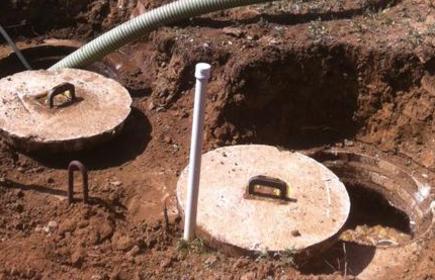
All septic tanks are underground. In order for service of any kind be done to the tank, the tank lids need to be exposed. This means digging. Tank depths can vary from 6" to 4-5' or more in some very rare cases. Most tanks we find are about 1 1/2' to 2' deep. In some cases, dirt has been added or they are located in a bank and the depths vary. We recommend tank risers be installed on all tanks with a depth of 18" or more to eliminate the back breaking chore of uncovering the tank. This also encourages regular maintenance when the lids are easy to get to. The pictures below show a tank that has been uncovered and is ready to pump out. We of course will move the lids as they are heavy. But as you can see, they are large access ports. Not to be mistaken with cleanouts or smaller pipe shaped openings.
Debris that we commonly find inside the tank are construction trash, pieces of pipe, toys, dirt, wood, rocks, roots, sand etc. Most commonly, construction trash and leftover pipe fittings are left behind. Such items take up space inside the tank not allowing it the full capacity to service the house. Most of these items have to be physically removed from the tank and disposed of properly. Most of the items found at the bottom of the tank are not large enough to worry about, occasionally we run across larger items or large quantities of dirt or roots that do cause a problem and do need to be removed.
Septic tanks, tank risers or leach fields are not designed to be driven on or handle the weight of large objects. Damage can occur to leach field components, tanks can collapse, Lids can break and safety hazards will be an issue. There are septic tanks which are traffic rated and risers which are traffic rated. Unfortunately the cost for these items is quite a bit more and they are not commonly used in residential settings.
Never Drive on your septic system
The suggested maintenance schedule for a septic system under normal conditions is every 3 years. Systems that are located in poor soil, high water table areas or service large families, may require more frequent pumping intervals.
Normal Conditions
1. Total number of occupants is 4 or 5 including children
2. Laundry is spaced out rather than done all at once
3. There are no leaky toilets or faucets in the house
4. Bacteria killing products are used in moderation
5. Property is not located in a high ground water area
There are always exceptions to the rule and special circumstances such as a large gathering or accidental overuse can and do happen every now and then.
When a septic system is designed, the size of the system is based on the number of bedrooms in the home. It is assumed that each bedroom could accommodate 2 people and each of those 2 people would use about 70 gallons of water per day. Taking all of this information into consideration, that equates to 20 cubic feet per bedroom, per day. On the average it takes approximately 1 hour to complete this portion of the inspection process. We know exactly how much water is used for the test whether or not the house has high or low water pressure. We measure how much the level inside the tank rises and how long it takes to recover. Some companies let the water run for 10-20 minutes and call it good. The truth of the matter is that most systems that do have problems or are failed can take that much water and you end up with inaccurate results and miss guided information. Our test gives the most accurate results and provides the best information possible without disturbing the leaching system and creating more problems.
The process of deterioration happens to concrete septic tanks. Over a period of years, slowly the gases inside the tank start to eat away at the surface of the concrete. This process usually only happens to the upper 20% of the tank and the top itself. Areas where the liquid effluent stay in contact with the cement are normally not affected. As the process continues, the surface areas become rough and start to crumble away. Slowly larger pieces begin to break away and eventually the re bar or steel inside the concrete once used for strength will rust away. As the process continues, the concrete looses its strength and starts to soften. Eventually it will eat all the way through.
This is a normal process and it does take many years in most cases.
These are scaled drawings that show exactly where the septic tank and leaching system are located. The County keeps records as far back as 1978. Should you need to have one of these for a room addition, pool installation or just personal reference and the county does not have one on file, you will need to have one drawn up by a licensed contractor.
A licensed contractor will need to physically mark out every foot of leach line, the exact location of the septic tank as well as the lines running from the house to the tank and the tank to the first line.
He then will draw out all of this information to scale with all of the pertinent site information including set backs and utilities.
When too much water is introduced into a system and it cannot be absorbed into the soil, backups are caused or effluent will surface onto the ground. For more information, go to Septic 101 towards the bottom of the page.
Pricing effective as of Dec 1, 2008
Residential septic tank pumping $400.00 (Valley Center and Local Area)
Septic Inspection $150.00 (Pass or Fail)
Commercial Rates for 3000 or more Gallons $.27 per gallon
System Diagnoses $300.00 Minimum
Tank Risers Installed - 1 ft tall $150.00 each riser Additional Riser height per foot $25.00 per linear foot each riser Tank Location $75.00 Leach Field Location $400.00 to start plus $100.00 per hour (Flagged on site only) Service Call $50.00